
Meshtastic Mobile Nodes Compared! Best & Worst ????
Published by Vivian van Zyl in Meshtastic the 06/05/2025 at 03:30 pm

When it comes to choosing the right Meshtastic mobile node for your IoT or mesh networking projects, the options can be overwhelming. With so many devices on the market, each offering different features, battery life, range, and price points, how do you know which one suits your needs best? Drawing from my personal experience with several popular models, I’m sharing a detailed comparison of the Meshtastic mobile nodes I own. This review is based on real-life usage, highlighting what works, what doesn’t, and what might be the ultimate mobile node for you.
Let’s dive into the strengths and weaknesses of each node, starting from my oldest build to the newest, including some custom modifications and practical insights.
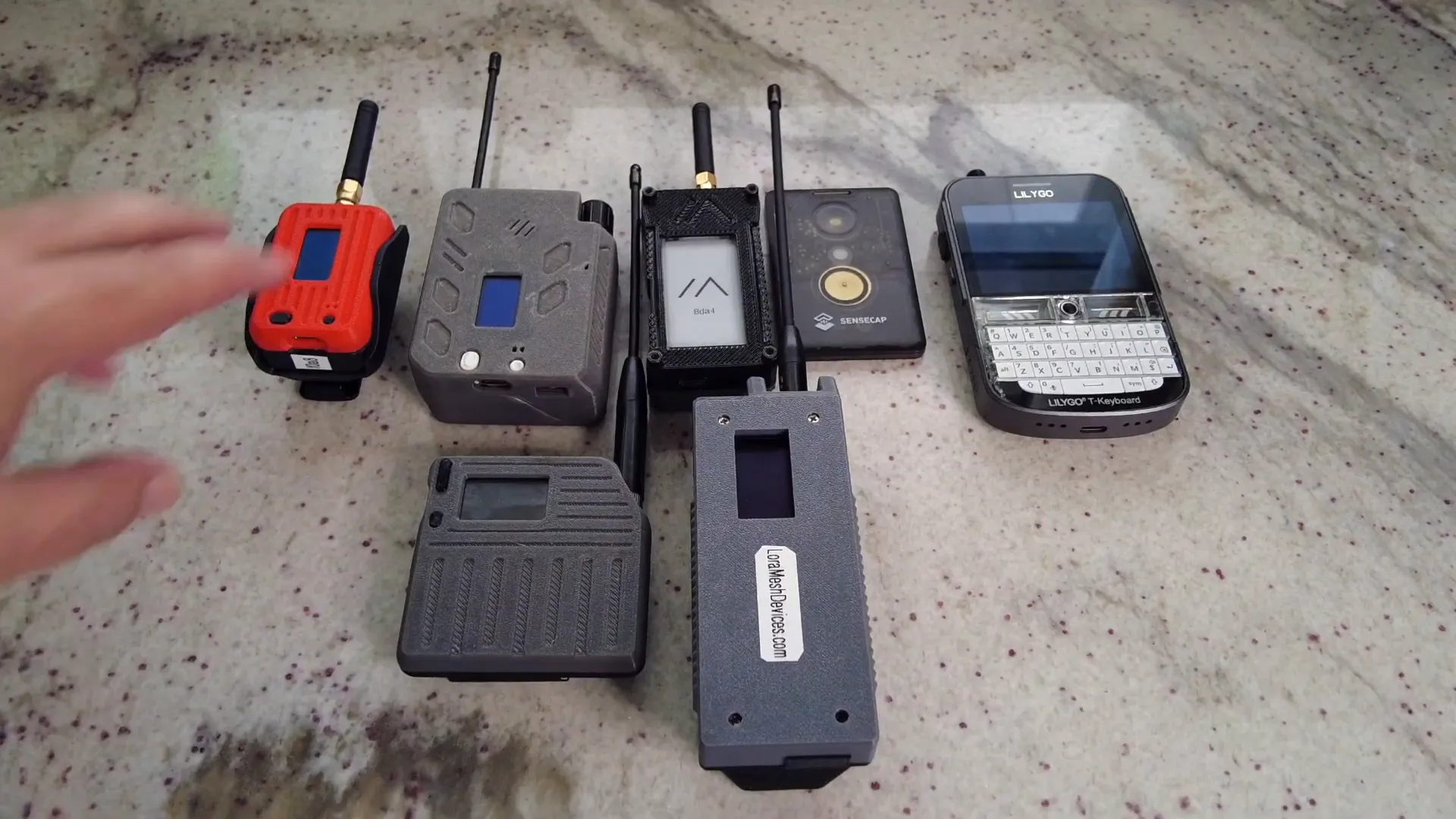
Table of Contents
- My Journey Through Meshtastic Mobile Nodes
- Heltec V3: The Classic Starting Point
- Upgraded Heltec V3 with GPS and Speaker
- Heltec E-Paper Display Node: Aesthetic but Limited
- Seeed SenseCAP T1000E: Almost Perfect
- LILYGO T-Deck Plus: Feature-Rich but with Trade-offs
- Heltec T114: The New Benchmark for Battery Life
- LILYGO T-Beam: Great Range but Bulky
- Final Thoughts: Which Meshtastic Mobile Node is Right for You?
- Frequently Asked Questions (FAQ)
My Journey Through Meshtastic Mobile Nodes
I began my journey with a simple Heltec V3 node, and over time, I expanded my collection, modifying and upgrading nodes to improve functionality and usability. While this isn’t a complete list of all available mobile nodes—most notably missing is the highly praised Nano G2 from RAC Wireless—I’ll share my honest thoughts on the ones I have. Some of these nodes came prebuilt, while for others, I designed and printed custom cases to enhance their portability and protection.
One thing I’ve learned is that you can never have enough mobile nodes, especially when experimenting with Meshtastic mesh networks. Each node brings something unique to the table.
Heltec V3: The Classic Starting Point
My oldest and most basic node is the Heltec V3. It’s a very affordable device with a great size that fits comfortably on your belt or in your pocket. The range is solid, making it reliable for most outdoor mesh networking scenarios. However, the battery life leaves something to be desired.
Functionality-wise, the Heltec V3 is quite minimal—equipped with a belt clip but lacking extra features like GPS or a speaker. Despite this, the build quality is robust, and the portability is excellent. I purchased a case for this one rather than printing it myself, which added to the convenience.
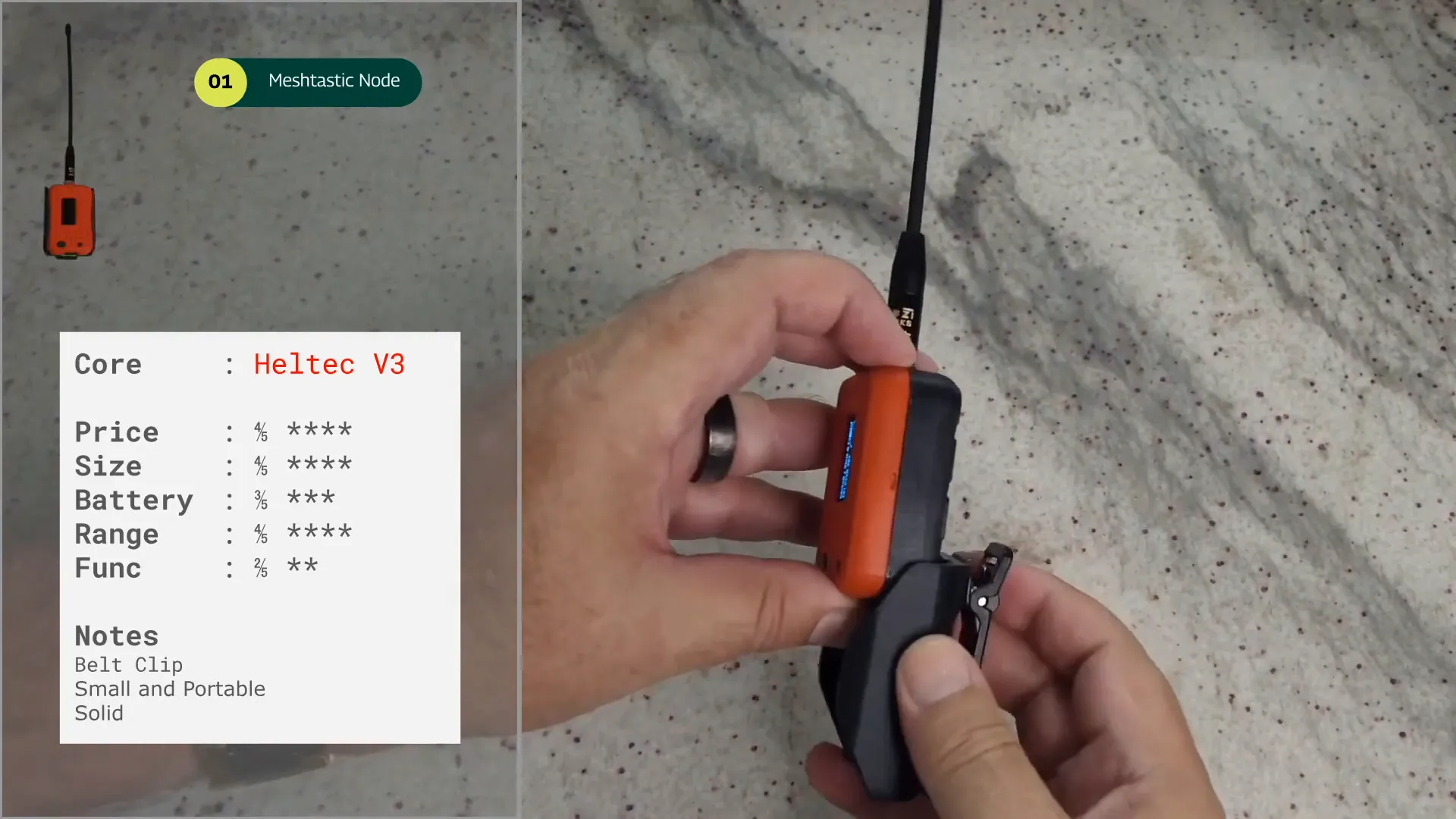
For anyone starting out with Meshtastic, the Heltec V3 offers a reliable and compact option, especially if you’re on a budget.
Upgraded Heltec V3 with GPS and Speaker
Next, I upgraded to another Heltec V3 but housed in a custom-printed case that I designed myself. This version is a significant step up in terms of functionality. I added a GPS module and a speaker so it can notify me with audio alerts. The speaker hole is visible on the case, and I included a rotary selector switch that allows me to send canned messages quickly.
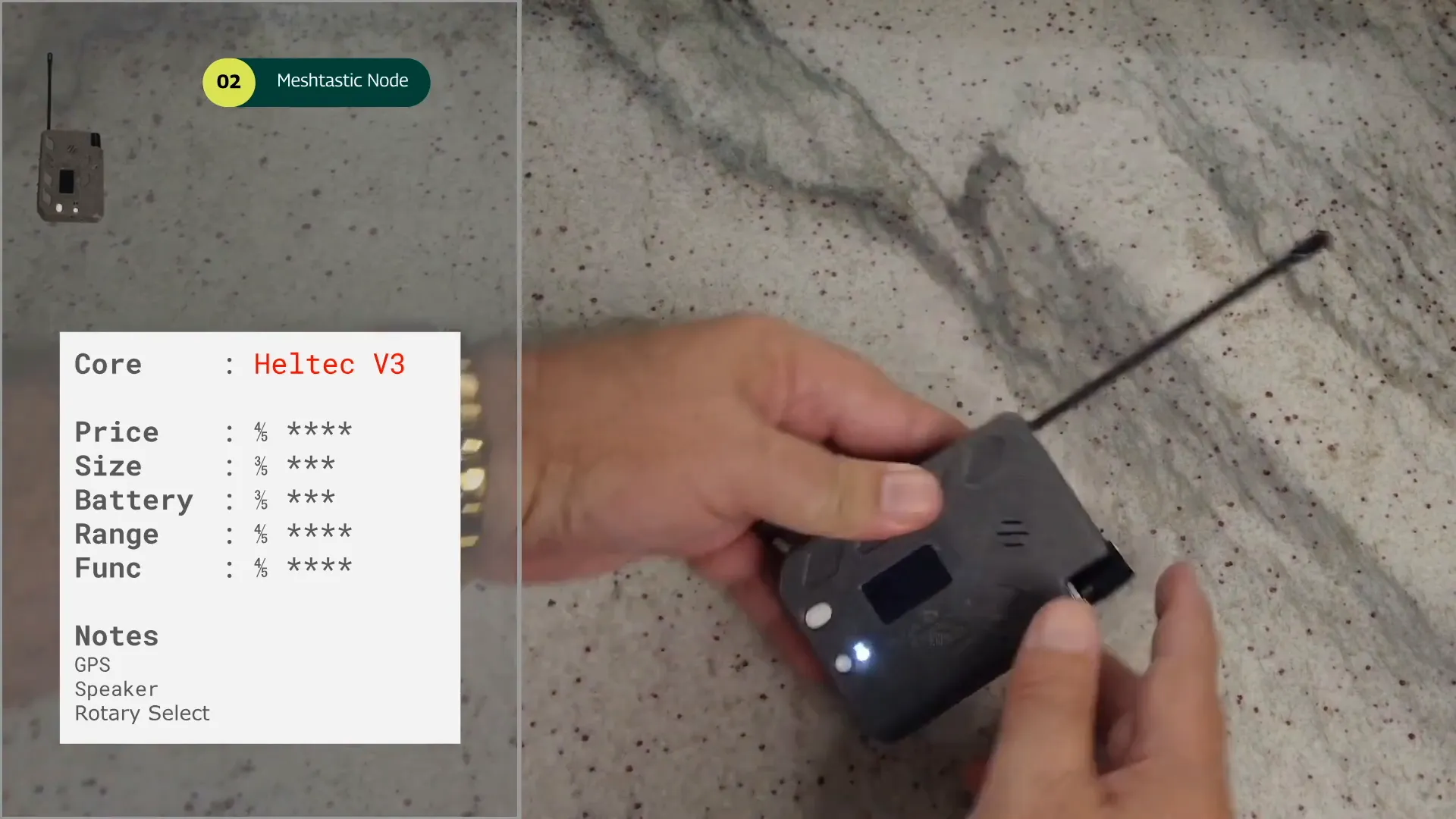
This node maintains the great range of the original V3 but adds much-needed features that enhance usability. However, the battery life remains a weak point. Still, if you want a more feature-rich Meshtastic node without breaking the bank, this is a solid option.
Heltec E-Paper Display Node: Aesthetic but Limited
One of the nodes I experimented with is the Heltec E-Paper Display model. It features an e-paper screen and buttons printed in TPU on a case I printed myself. The new user interface looks nice, but functionality-wise, this node falls short. It lacks any real utility beyond basic display capabilities, making it less practical for mobile use.
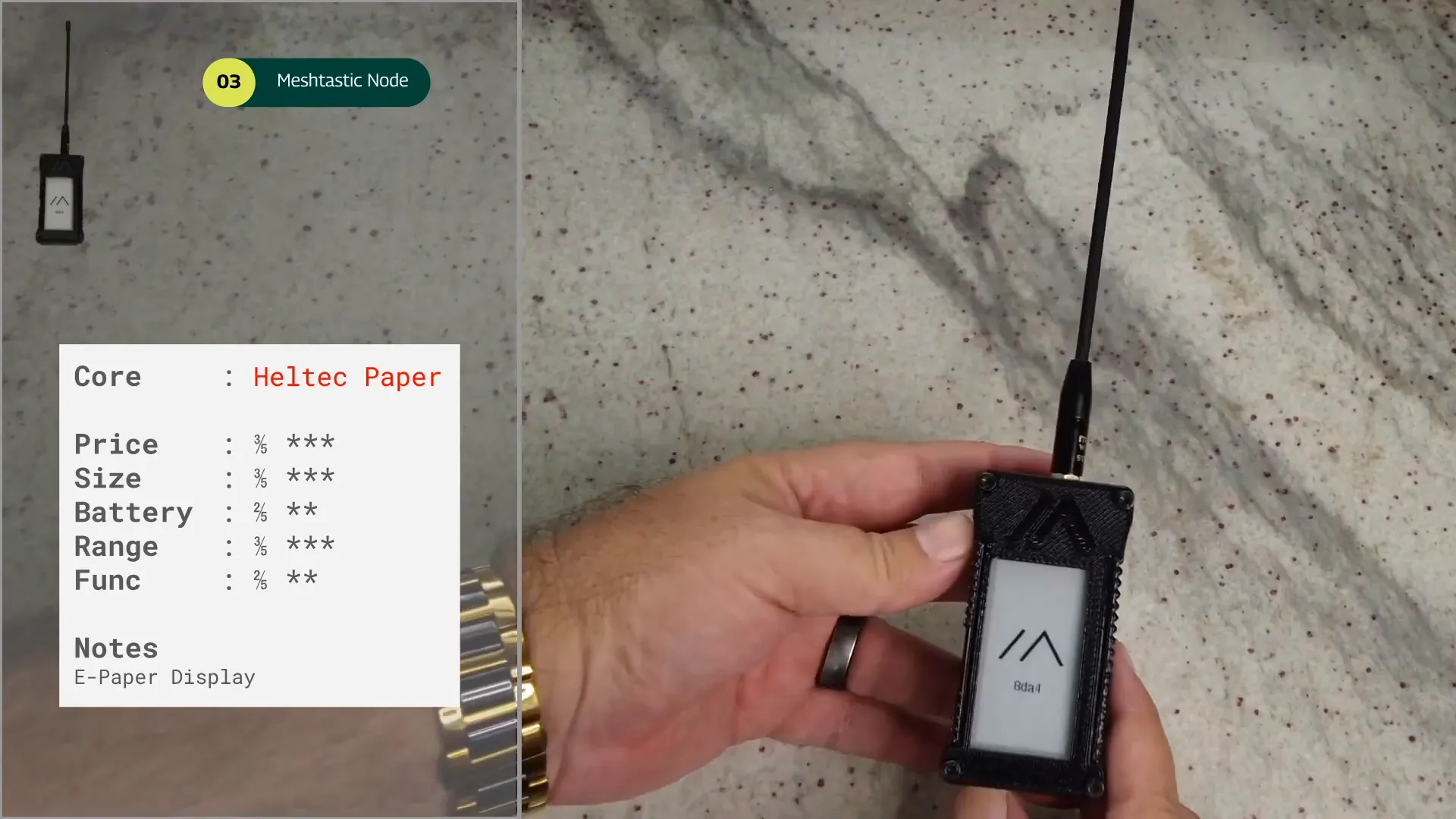
While the e-paper display is visually appealing and low power, this node doesn’t offer much in terms of range or additional features, so I wouldn’t recommend it as a primary mobile node.
Seeed SenseCAP T1000E: Almost Perfect
The Seeed SenseCAP T1000E is one of the best nodes I’ve used. It’s a bit on the expensive side, but the size, battery life, and range justify the cost. This node comes packed with features: GPS, speaker, temperature monitor, and more.
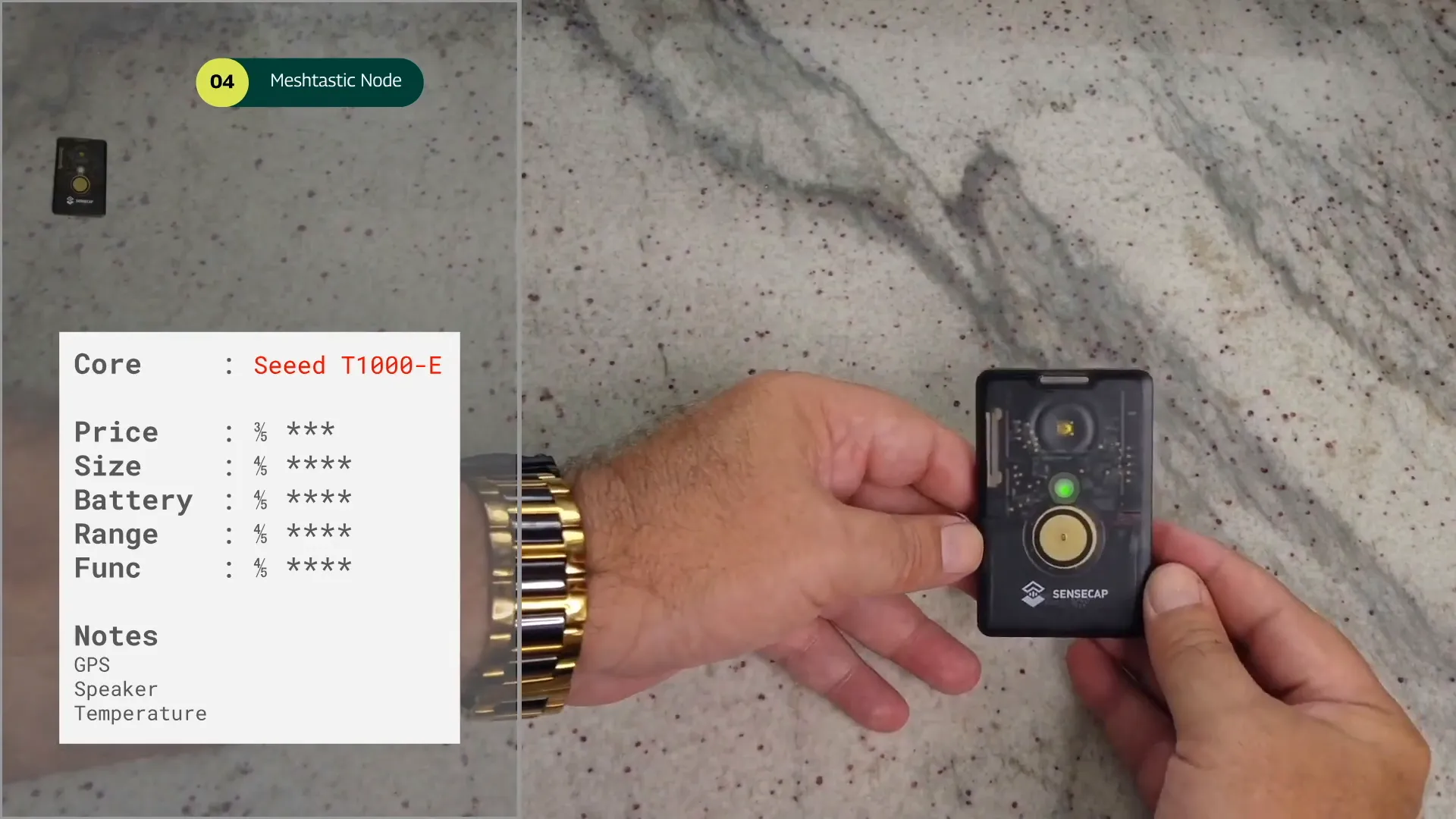
Functionality-wise, it’s very close to the perfect Meshtastic mobile node. The only drawback is the lack of a screen, which some users might find limiting. Still, its robust feature set and reliable performance make it a top contender.
LILYGO T-Deck Plus: Feature-Rich but with Trade-offs
The LILYGO T-Deck Plus node is packed with functionality: GPS, speaker, SD card slot, external antenna support, and even a keyboard. It’s a versatile device that can handle complex tasks on the mesh network.
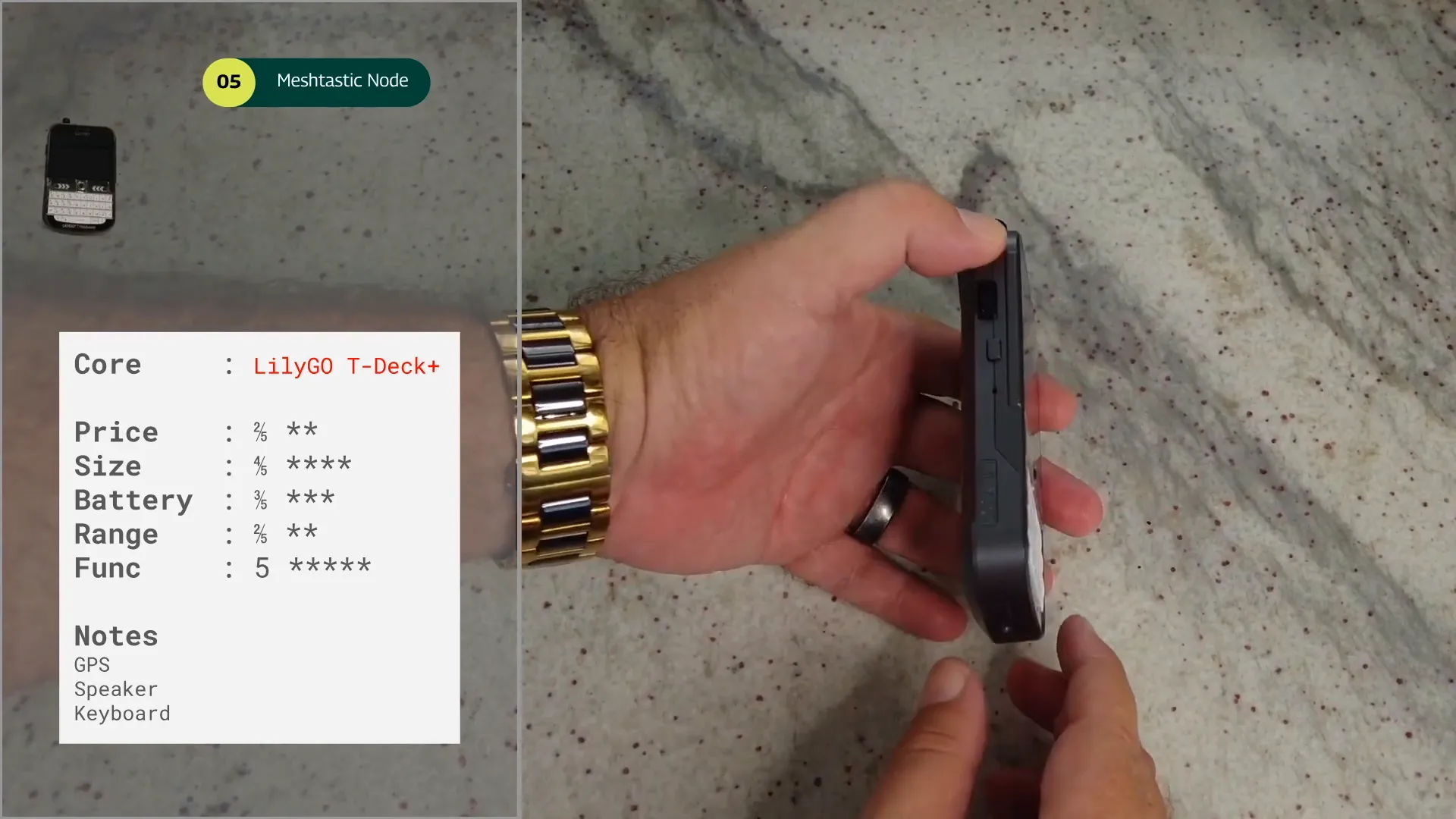
However, the price is quite high, and the battery life and range are disappointing. Even with an external antenna, the range only improves slightly. If you prioritize features over battery endurance and cost, this node might be worth considering.
Heltec T114: The New Benchmark for Battery Life
The Heltec T114 is my favorite newer node, primarily due to its exceptional battery life. With a small solar panel attached, this device can run almost indefinitely, taking about a week to drain the battery under normal use.
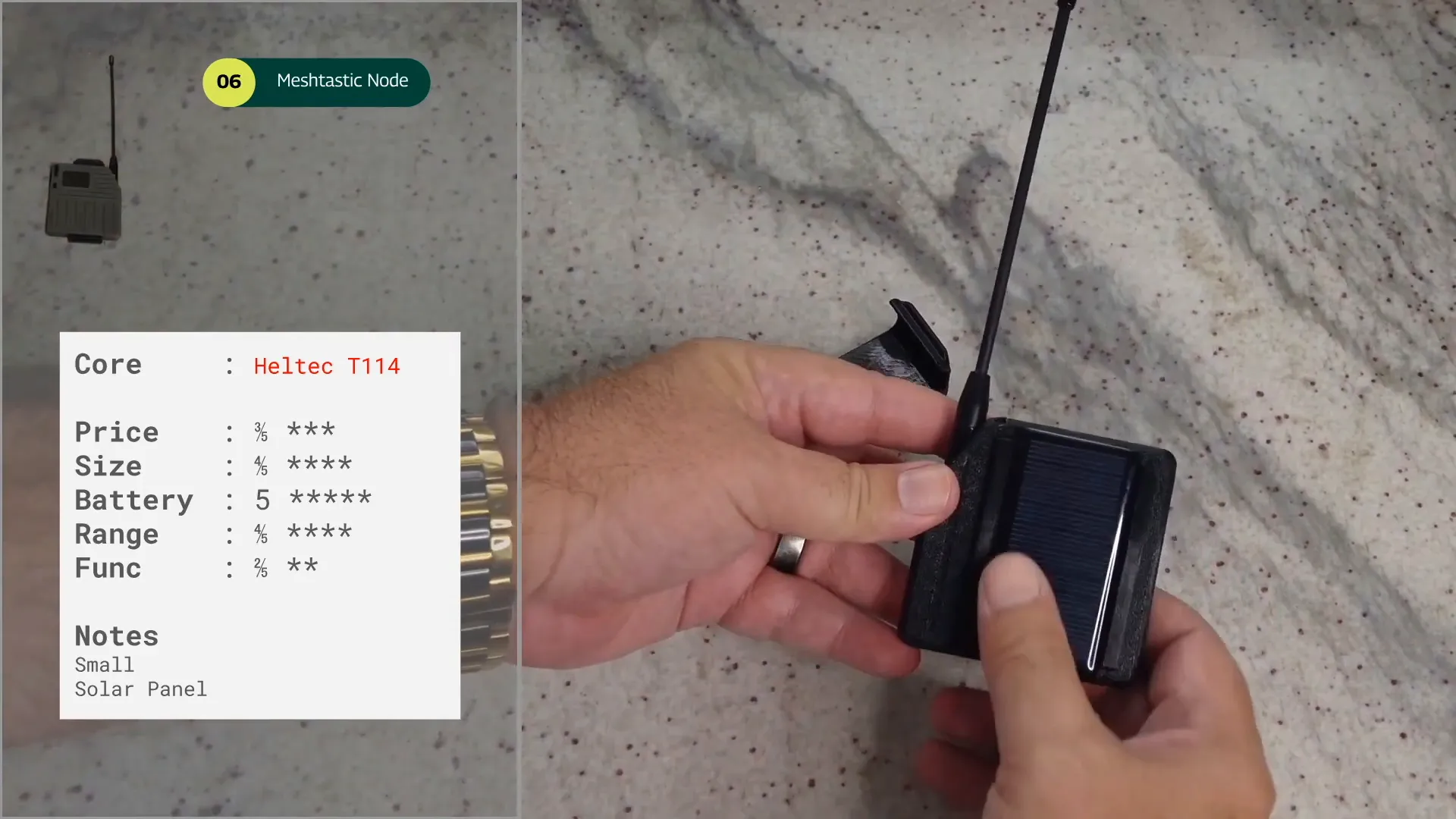
Its range is excellent, and the node is compact and lightweight, making it an ideal replacement for the older Heltec V3. It also features a belt clip for easy attachment. For anyone who needs long-lasting performance without constant recharging, this is the node to beat.
LILYGO T-Beam: Great Range but Bulky
The LILYGO T-Beam Supreme offers amazing range and responsiveness. The GPS works well, and the buttons respond immediately, which is a huge plus for quick interaction.
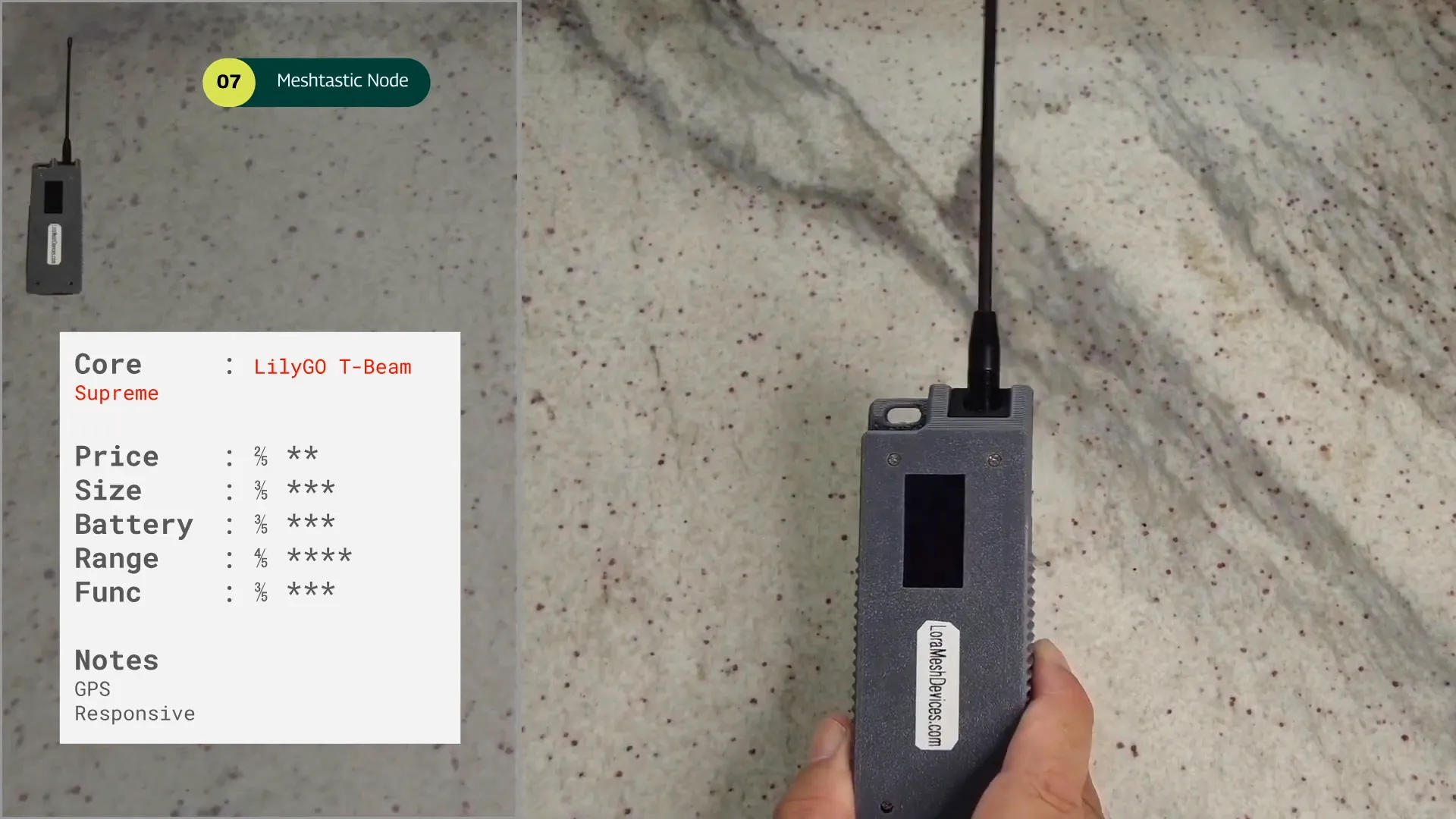
However, it’s bulky and large, making it less portable, and the battery life is poor. The price is also on the higher side. If range is your top priority and size and battery life are less important, this node will perform well.
Final Thoughts: Which Meshtastic Mobile Node is Right for You?
After testing and using all these nodes, it really comes down to a few favorites based on your priorities:
- Heltec T114: Best battery life and excellent range. Lightweight and compact. Perfect for long-term use with solar charging.
- Heltec V3 with GPS and speaker: Great functionality at a reasonable price. Good range but weaker battery life.
- Seeed SenseCAP T1000E: Nearly perfect in features and performance, except it lacks a screen.
- LILYGO T-Deck Plus: Feature-rich but expensive with poor range and battery life.
- LILYGO T-Beam Supreme: Excellent range and responsiveness but bulky and with poor battery life.
Personally, I lean towards the Heltec T114 because it balances size, battery life, and range so well. Adding GPS and a speaker to it could make it the ultimate mobile Meshtastic node. The older Heltec V3 remains a good budget option, especially if you customize it like I did with extra features.
While I don’t have the RAC Wireless Nano G2, which is popular in the community, these are my experiences with the nodes I own. Each has its place depending on what you value most—be it battery life, range, price, or functionality.
Frequently Asked Questions (FAQ)
What is a Meshtastic mobile node?
A Meshtastic mobile node is a portable device that uses LoRa technology to create a mesh network for communication without relying on cellular or Wi-Fi networks. These nodes are commonly used for off-grid messaging, outdoor adventures, and IoT projects.
Which Meshtastic mobile node has the best battery life?
The Heltec T114 stands out for its exceptional battery life, especially when paired with a small solar panel. It can last about a week on a single charge under normal use.
Are there nodes with GPS and speakers?
Yes, several nodes including the upgraded Heltec V3, Seeed SenseCAP T1000E, and LILYGO T-Deck Plus come equipped with GPS modules and speakers for notifications and enhanced functionality.
What is the best node for range?
The LILYGO T-Beam Supreme offers the best range, but it comes with trade-offs in size and battery life. The Heltec V3 and T114 also provide good range for most users.
Is the Heltec E-Paper node a good choice?
While the Heltec E-Paper node has an attractive display, it lacks practical functionality and range, making it less suitable as a primary mobile node.
Are custom cases worth it for Meshtastic nodes?
Custom printed cases can enhance the durability, portability, and usability of your nodes. I’ve found them especially useful for nodes like the Heltec V3, where I added features like speakers and rotary switches.
Choosing the right Meshtastic mobile node depends on your specific needs and budget. Whether you prioritize battery life, range, or functionality, there’s a node out there for you. I hope this comparison helps you make an informed decision for your next mesh networking adventure!